
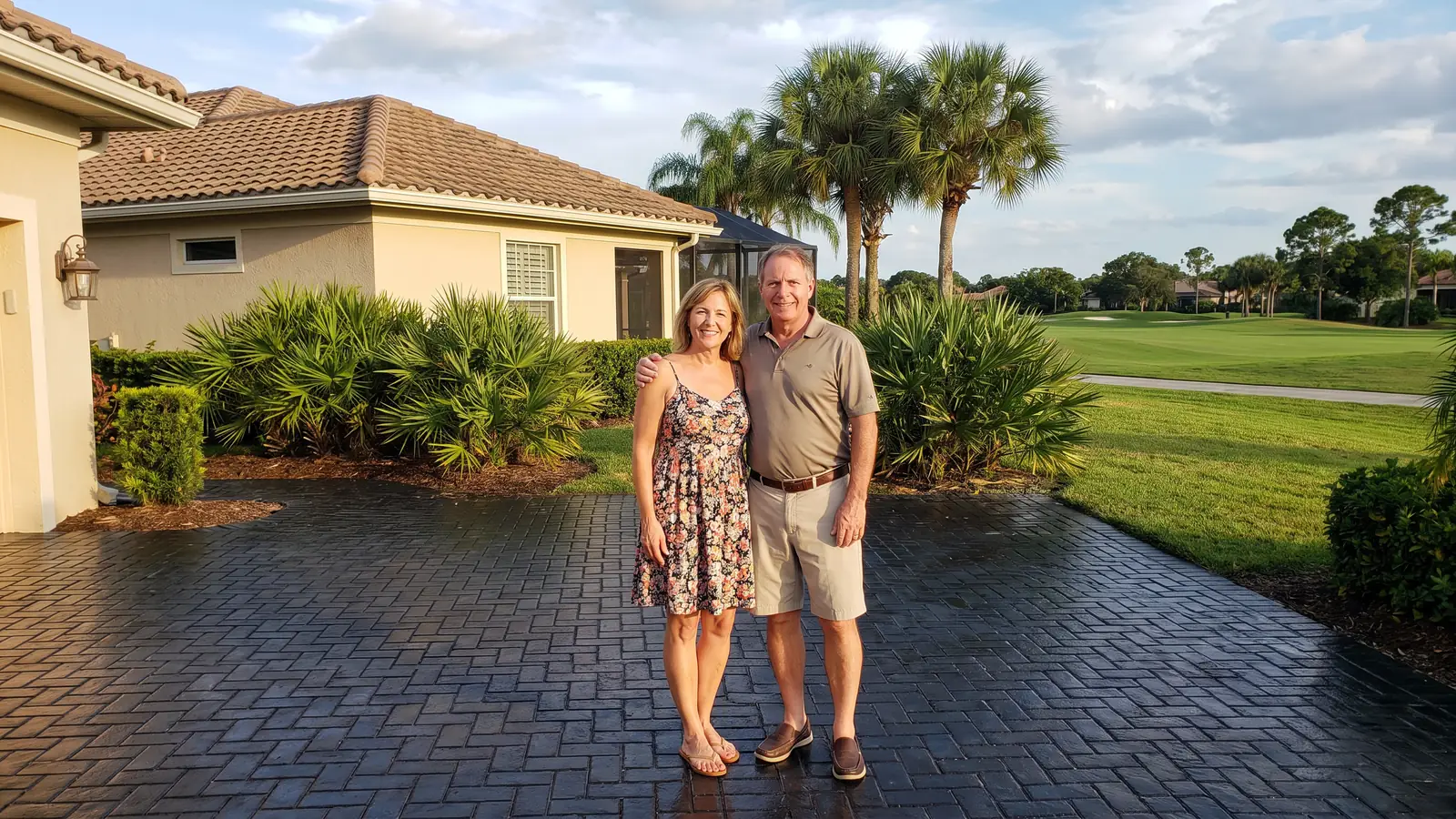
Paver sealing for Jacksonville Beach homes
Paver Sealing in Jacksonville Beach, FL
Salt spray and heavy summer rain are hard on Jacksonville Beach pavers, so call (904) 606-1450 for a free estimate.
- Brings out deeper paver color
- Fresh joint sand helps lock pavers in place
- Gives weeds less room to grow
- Makes the surface easier to keep clean
- Free estimate, no obligation
Request a Free Estimate
Free, no obligation.
Fast, careful paver sealing in Jacksonville Beach
Paver sealing is available across Jacksonville Beach, from the walkable grid of South Pablo Beach to the streets around San Pablo Terrace. A local contractor handles the wash, the joint sand and the sealer. You can request your free estimate, and a reply comes within 1 business day, usually much sooner.
Near the ocean, a driveway can pick up a salty haze, dull color and a green corner where the sprinkler hits. A wash, new joint sand and a fresh coat bring back the even tone you saw the day the pavers went in. Call (904) 606-1450 and describe yours, and the estimate is free with no obligation.
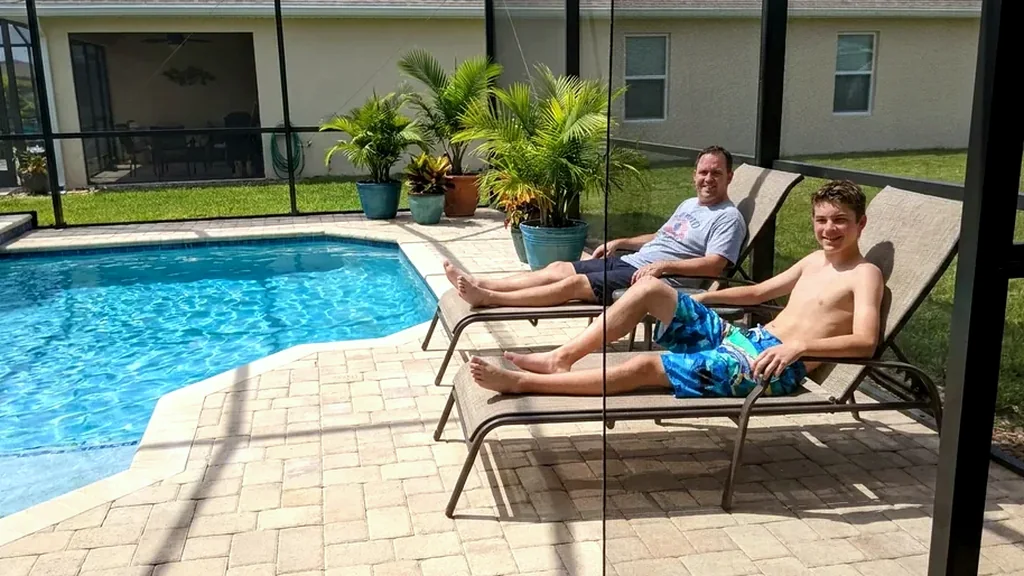
Why hire a local paver sealing contractor in Jacksonville Beach?
Jacksonville Beach homeowners pick a local contractor because salt spray, summer downpours and city driveway rules all touch a paver job. To hear how that fits your lot, call (904) 606-1450.
A free estimate
A local contractor looks at your Jacksonville Beach driveway, patio or pool deck and quotes the job. You are not obligated to hire anyone.
A published price range
Companies here publish $1.75 to $3.25 per square foot to clean, sand and seal. Compare any Jacksonville Beach quote to that range.
A finish for the pool deck
Matte takes the glare off a sunny deck and hides scuffs longer. A wet look gives richer color that scuffs sooner.
A reply in 1 business day
Request a quote and expect to hear back within 1 business day, usually much sooner. After that, you decide what happens next.
Get Your Free Estimate in Jacksonville Beach
Tell us about your pavers in Jacksonville Beach.
Free, no obligation

What paver problems show up most in Jacksonville Beach?
Salt spray that dulls the surface
A Jacksonville paver company says the sea breeze carries salty air across the Beaches. It adds that beachside winds push salt spray that can dull a surface. A paver maker adds that salt crystallizes on surfaces as moisture dries, which over time may wear softer materials. The same Jacksonville company says driveways near the coast need resealing about every 18 to 24 months. Jacksonville Beach is three blocks from the ocean where US 90 ends, so a driveway here sees plenty of it. Rinsing the salt film off first matters, because sealer would trap it underneath. Look for a dull, chalky patch on the side that faces the wind. That is a good cue to book a look.
Downpours that flood the street
NOAA normals show Jacksonville Beach getting 52.44 inches of rain a year, with August averaging 7.54 inches. In December 2016, News4Jax reported part of First Avenue South underwater for hours, with driveways near 12th Avenue South flooded. Residents said they had come to expect it. Hurricane Matthew in 2016 pushed water over the dunes and inland as far as 2nd Street. Water like that leaves silt on pavers and washes sand out of the joints. After a storm, check whether the low end of your drive looks muddy or has gaps between pavers. Those are the first places to show wear.
A driveway apron the city rebuilds
The city says its urban trails project removes paver driveway aprons for the trail and replaces the pavers afterward. It also says its paver driveway standards were updated in October 2023. A company that works around Saint Augustine says to hold new pavers for about 60 to 90 days. If your apron was recently rebuilt, hold off on sealer and ask the contractor about timing. A phone call to city staff settles what counts as a change. A new apron is also a good time to ask about matching the color of the older pavers beside it.
Glare and slick spots at the pool
A Jacksonville cost guide says film-forming sealers can make pool decks slippery, so most pool decks get a penetrating sealer instead. It also says pool areas and tree-shaded patios often need extra cleaning time for algae, mildew and leaf stain. A deck in full sun can glare, which is why a low-sheen finish is a common pick. Describe your deck before the estimate, even by phone. Tell the contractor if you swim often, since the deck then stays wet. Say how much sun it gets and whether the screen or a tree shades it. That detail helps the contractor choose a finish.
Joint sand that rain keeps taking
One Jacksonville company puts washouts and sinking at the head of its list of paver failures. Unsealed joint sand washes out, and rain then reaches the base under the pavers. Heavy summer rain makes that worse in a city that sees about 122 rainy days a year, per NOAA. Weeds in the joints are an early sign that sand has already left. Fresh sand and a sealed surface hold up better against the next storm. That is the plain reason to do both.
Does paver sealing differ across Jacksonville Beach neighborhoods?
Does the age of your beach home matter?
It can, because the neighborhoods here were built in different decades. Near South Pablo Beach, Sea Grove holds 174 homes from the 1920s. Ocean Terrace dates to the early 1980s, and San Pablo Terrace homes were built from 1955 to 2005. Tell the contractor your neighborhood when you request your free estimate.
What stands out in San Pablo Terrace?
San Pablo Terrace, off Penman Road, has a median build year of 1963 and a median living area of about 1,646 square feet. Smaller homes usually mean less paver area, which means a smaller total at the same rate. Ocean Terrace has a confirmed HOA and sits near South Beach Park, so ask whether sealer color is covered. For help sizing a job, call (904) 606-1450.
Why do mid-century homes need a closer look?
Wikipedia says the city has a notable collection of mid-century modern homes, much of it by architect William Morgan. On a house with clean, simple lines, a matte finish keeps the pavers from competing with the architecture. It is a sensible default if you are unsure, and the contractor can show you a sample. When you are ready, request your free estimate and mention the style of your house.
What does paver sealing cost in Jacksonville Beach?
What does a quote usually cover per square foot?
The published range from regional companies is $1.75 to $3.25 per square foot, covering the clean, the sand and the seal. A Jacksonville cost guide notes that smaller jobs generally cost more per square foot, so a compact beach patio may land higher in the range. A full job with a driveway, walkway, pool deck and patio spreads the setup over more area, which can ease the per-foot number. To price yours, request your free estimate.
Which details raise the total?
Old sealer that has failed matters too, since the same guide says white or flaking sealer must be stripped first. Pavers in the city right-of-way may also need a city permit, so ask before the job is booked. Salt film, deep algae and missing sand add washing time. Call (904) 606-1450 and the contractor can say which of these fit your beach lot.
| Paved area | Typical example | Clean, sand and seal |
|---|---|---|
| 300 sq ft | Small patio or walkway | $525 to $975 |
| 600 sq ft | Two car driveway | $1,050 to $1,950 |
| 1,000 sq ft | Large driveway or pool deck | $1,750 to $3,250 |
| 1,500 sq ft | Driveway plus pool deck | $2,625 to $4,875 |
Math based on the $1.75 to $3.25 per square foot that Northeast Florida paver companies publish. Your contractor sets the actual price after seeing the surface. Repairs, leveling and stripping failed sealer are usually extra.
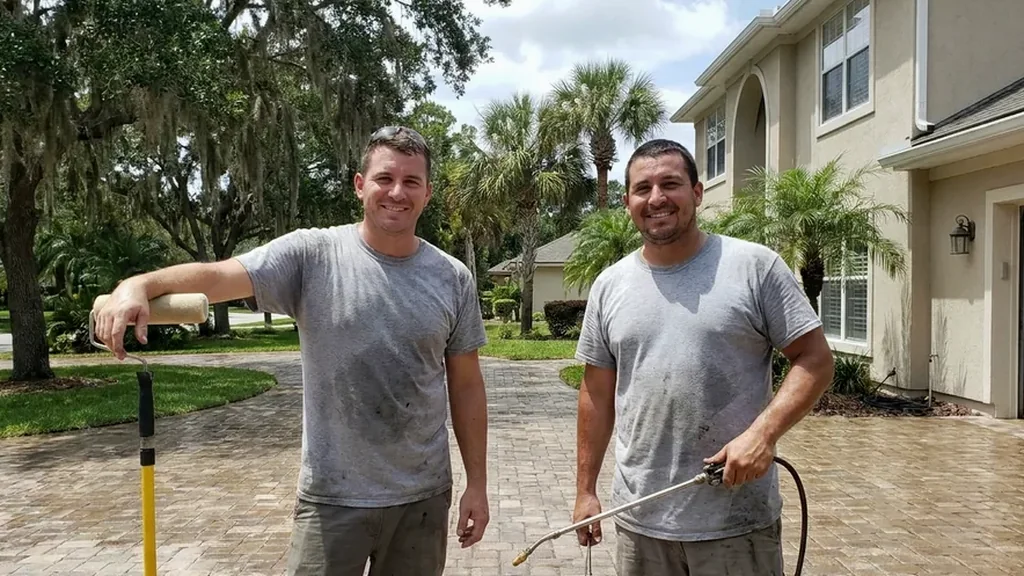
How does a paver sealing job work in Jacksonville Beach?
Show them the apron and the pool deck
Walk the property with the contractor and point things out: the apron by the street, the walkway, the deck and any spot where rain pools. The crew measures each area and marks dips to fix first. Say what you remember about past sealer, since the old product limits what can go on top. A look at the street side also shows whether the city rebuilt the apron.
Get the salt off
Salt film, silt and green growth come off first, and rust spots get their own treatment before any coat goes on. Water is kept away from door tracks and flower beds. A deck that never gets full sun may need a second pass for algae.
Sand goes back in
Every open joint is refilled so the pavers lock together again, edge to edge. Polymeric sand is an option, since it hardens once wet and holds through storm runoff. The surface is swept clean before it dries, so the pavers look even from the street to the garage door.
Wait for a dry, calm day
The surface has to be dry. One Jacksonville company says spring and fall often offer the most stable weather, and warns against sealing over damp pavers or just before a downpour. Beach storms can build fast, so a good crew checks the forecast on the morning of the job.
Seal, then keep off
The coat is sprayed on, then back-rolled down into the joints. Pick matte for less glare near the pool or a wet look for deeper color. Then stay off for the time the contractor names, with cars waiting longest.
Complete paver services in Jacksonville Beach
How does a seal job unfold from wash to coat?
Here is how a Jacksonville Beach job runs. First comes the wash, which lifts salt film and green growth from every paver, and then fresh sand goes into the joints. After the surface dries, the coat goes on. Call (904) 606-1450 to ask how long that takes on your lot.
Which surfaces at a beach home get the work?
You probably have more than one surface to treat. The driveway and the street-side apron take the most wear, the pool deck needs grip, and back patios stay damp for long stretches. List them all when you request your free estimate, and ask for one combined quote that shows each area.
Which finish and base suit salt air?
Sealers come in two kinds. A film-forming coat sits on the surface and locks the sand in place, while a penetrating coat soaks in without changing the look. Pool decks usually get the second kind, since it is less slick. Call (904) 606-1450 to ask which fits your home.
What does the beach forecast do to your date?
Rain decides the date. NOAA normals put August at 7.54 inches and November at 2.50, the lowest month of the year. Spring and fall also tend to be steady, according to one Jacksonville company. For a date that suits your street, request your free estimate, and ask what happens if a storm moves in.
Questions to ask before you hire
- Can you work around my sprinkler schedule and keep the zones off for the cure time?
- How do you protect my landscaping and potted plants from the cleaner and sealer?
- Does my HOA need a notice before the work, and can you give me a start date for it?
- What happens if it rains or the dew is heavy on the day you scheduled?
- Will you show me the sealer's data sheet, not just the product name?
- How do you handle pavers near a screened lanai or pool cage?
- What do you do about efflorescence, the white haze that comes up through the pavers?
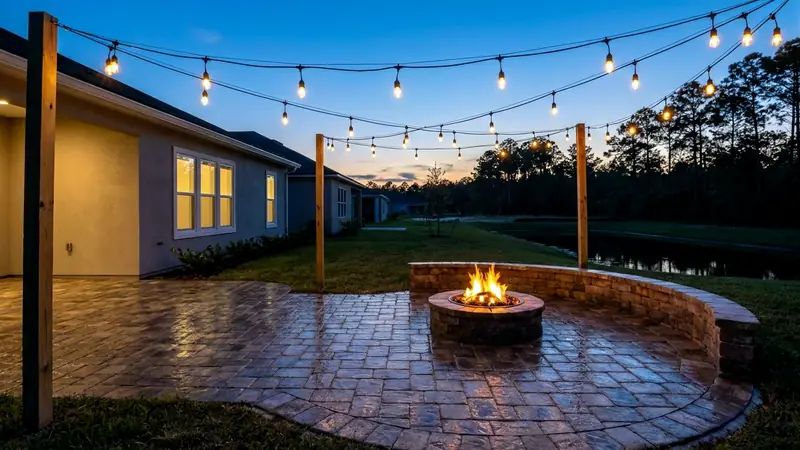
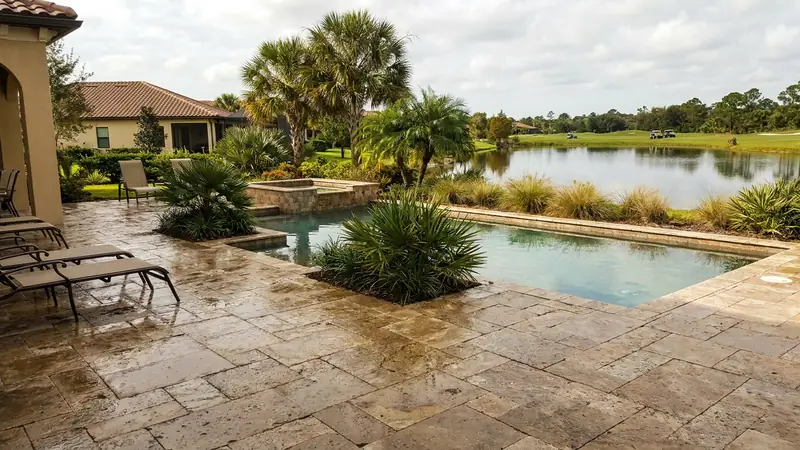
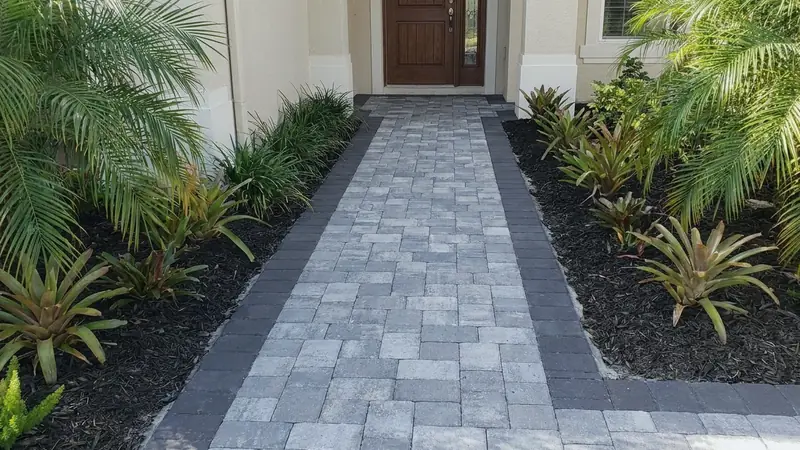
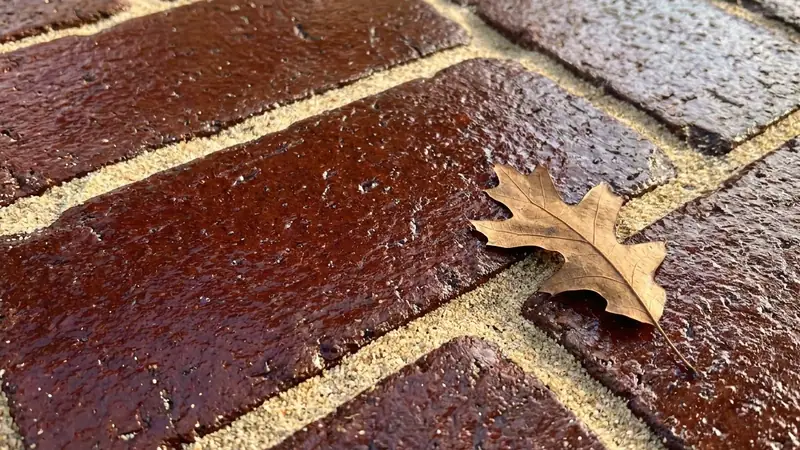
What do sealed pavers look like around Jacksonville Beach?
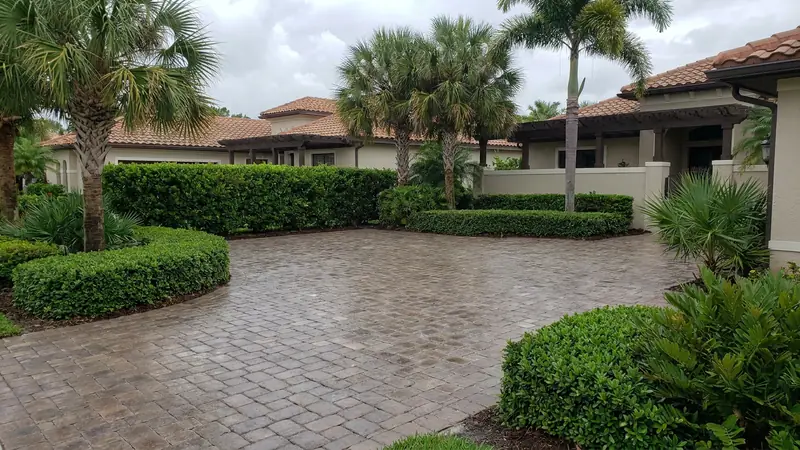
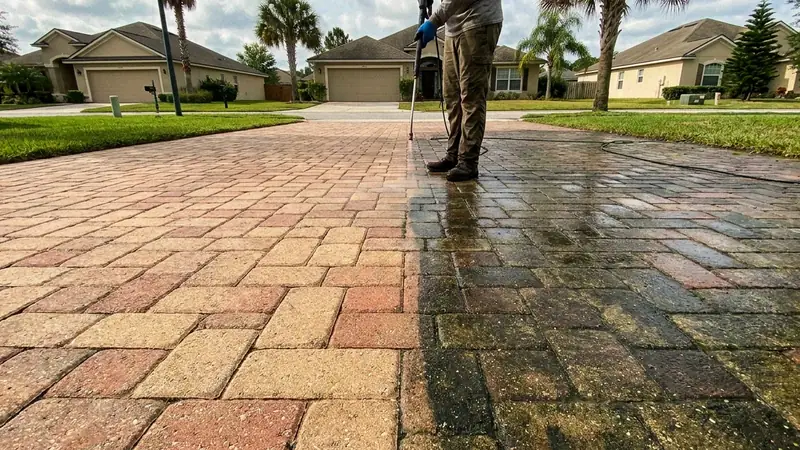
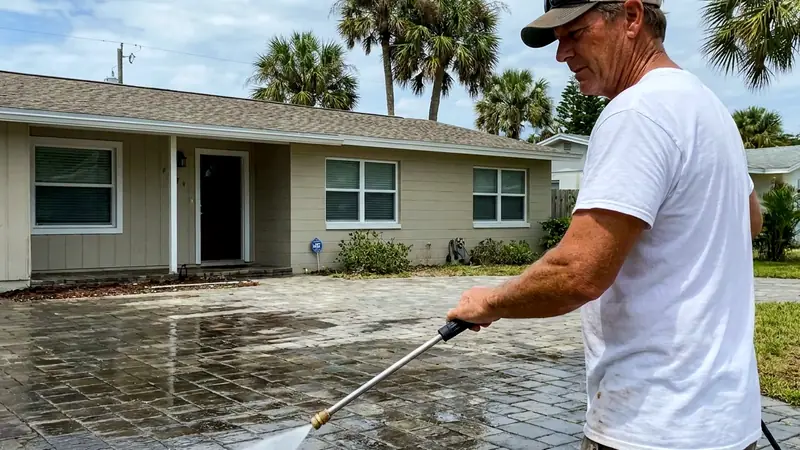
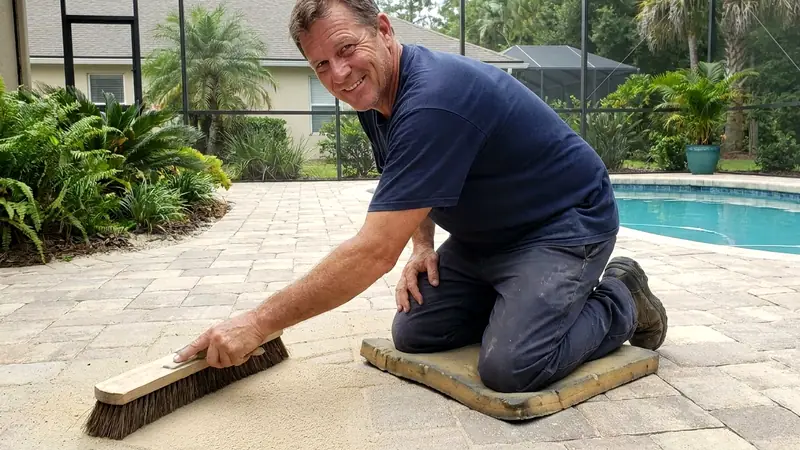
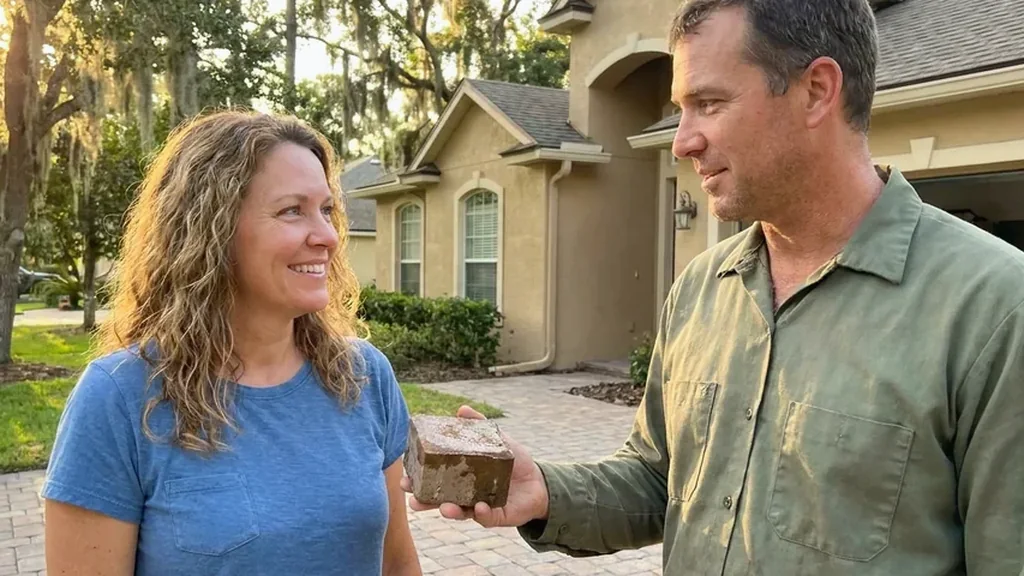
Why local matters in Jacksonville Beach
What does a contractor ask about the First Avenue blocks?
A contractor who works the beaches knows that First Avenue South and the blocks near 12th Avenue South have flooded. That tells them to ask where water sits on your lot, a question someone from far inland may skip. To reach a contractor who works Jacksonville Beach, call (904) 606-1450.
Which beach rules reach a driveway?
Beach rules as well as beach weather are part of the job. Jacksonville Beach says most use of city right-of-way beside a home needs a revocable encroachment permit, and a paver apron can fall in that space. You can request your free estimate and mention if your driveway meets the street. The contractor can then point out where your pavers end and the city's strip begins.
How do storm surges change the plan?
Storms have been close to home. In 2016, Hurricane Matthew sent water over the dunes and inland to at least 2nd Street, and Irma followed. A local contractor plans for wet ground and for pavers that need a longer dry-out. Call (904) 606-1450 to ask how that would go on your street.
Why does it help to hire someone who knows Jacksonville Beach?
Why did this beach town change names?
It helps because this town has changed names and shape more than once. The settlement was called Ruby in 1884, renamed Pablo Beach in 1886 and became Jacksonville Beach in 1925. US 90 ends here three blocks from the ocean, so salt is part of daily life. If you live near Beach Boulevard, request your free estimate.
What can the museum on Beach Boulevard tell you?
The Beaches Museum at 381 Beach Boulevard keeps the area's first post office, a 1911 train engine and an 1886 chapel. The pier reopened on July 6, 2022, after a three-year rebuild, and Latham Plaza at 11 1st Street N has an amphitheater for public events. If you live near the pier or the museum, call (904) 606-1450 and say where.
Frequently Asked Questions
What is the average cost to seal pavers in Jacksonville Beach?
Around Northeast Florida the published price for the whole clean, sand and seal is $1.75 to $3.25 per square foot. Smaller jobs generally cost more per square foot, so a compact beach patio can sit higher. Ask that the quote show the measured area. That lets you compare bids on the same basis. A bid that shows only a flat price should come with an explanation of how the area was measured.
Is there a downside to sealing pavers in Jacksonville Beach?
The main downsides are upkeep and timing. Sealer wears down over time and needs another coat, and wet-look finishes show scuffs sooner than matte ones. It also needs a dry surface, which can move the date during a rainy stretch. A film-forming coat can be slick at a pool, so ask about the type. Most of these are small trade-offs, and a clear talk up front handles them. Ask too what happens if rain arrives mid-job.
How long do paver sealers last near the ocean in Jacksonville Beach?
Companies tend to say a coat lasts two to five years before the next one. One Jacksonville company says driveways near the coast need resealing about every 18 to 24 months because of salt spray. Water that soaks in instead of beading means the coat has worn out. Faded color and joint sand that erodes after storms are other warning signs. Ask the contractor to check yours.
Is it better to spray or roll paver sealer?
Many crews do both. A Jacksonville paver company says pros typically spray the sealer and then back-roll it, so the coat is even and works into the joints. Ask the contractor how they apply it on your Jacksonville Beach pavers. Sealer that is laid on too thick can turn white, so even coverage matters more than speed.
Do I need a city permit for a paver driveway apron in Jacksonville Beach?
Possibly. The city says most use of right-of-way next to a home needs a revocable encroachment permit. It also says its paver driveway standards were updated in October 2023. Cleaning and sealing is different from rebuilding. Call the city before any change to the apron. A contractor who works the beaches will know the question to ask.
Can salt air damage my pavers?
It can wear on them over time. A paver maker explains that salt rides the air in tiny particles and crystallizes as moisture dries. A coat of sealer and a regular wash limit how much sits on the surface. Pavers close to the ocean in Jacksonville Beach face more of it. Ask the contractor to rinse the salt film before any sealer goes on.
How soon can I seal new pavers on my Jacksonville Beach driveway?
A company that works around Saint Augustine puts the wait for new pavers at roughly two to three months. That matters if the city rebuilt your apron for the urban trail. Ask the contractor to look at the new section first.
Is it good to seal pavers in Florida?
Generally yes, and salt air at the beach is one more reason. A coat holds joint sand, turns water away and makes grime easier to rinse. It also gives you a clear day to plan around, instead of reacting to stains. Salt air and summer storms make Jacksonville Beach a good fit. Wet-look finishes show scuffs sooner than matte, so weigh that when you choose.
Ready for a Free Estimate in Jacksonville Beach?
Call (904) 606-1450 and tell us about your pavers.
Free, no obligation